
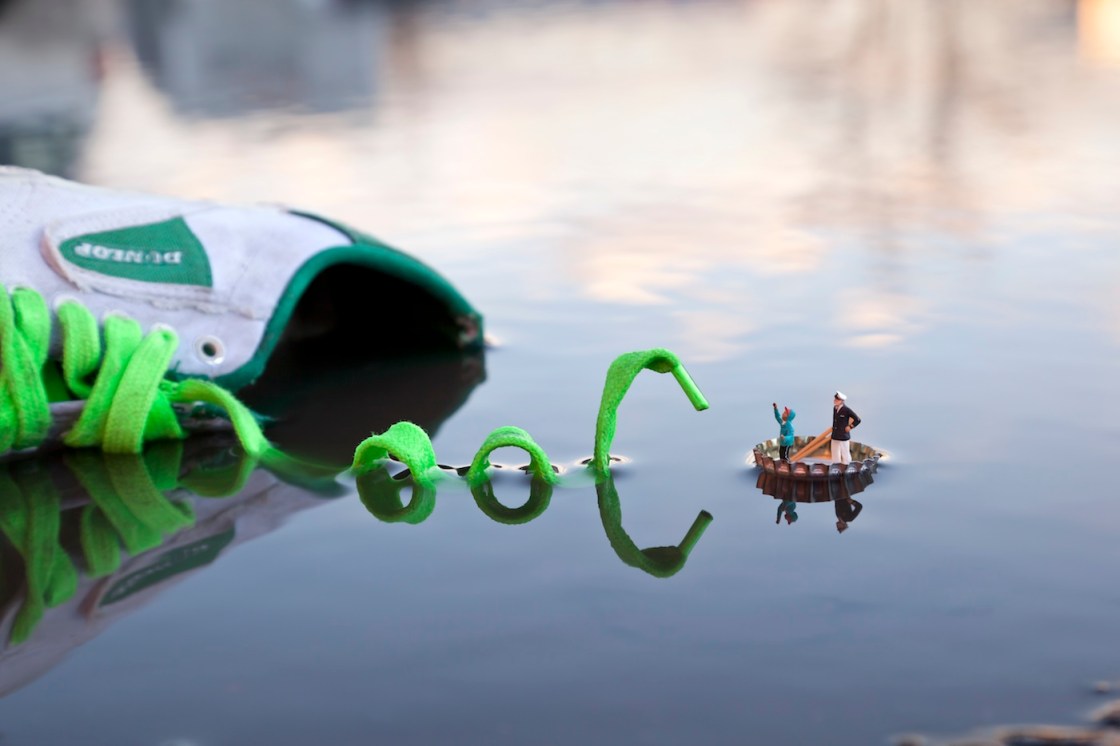

I started off wanting to write about public art, but got stuck on the definition. My god it’s tough to pin down. Wikipedia (which, let’s be honest, is going to be the most used definition, it’s not Britannica anymore) says public art “refers to works of art in any media that have been planned and executed with the specific intention of being sited or staged in the physical public domain, usually outside and accessible to all.” That can involve a lot of stuff. It includes statues of celebrated authors on street corners, bronze statues of horse-mounted men (sometimes with dodgy resumés) on town squares or the oddly shaped geometric metal rods that stick out from the ground along a high way that are supposedly modern art. There are some great examples, but others can be entirely horrendous.
That’s not where public art ends though, because adding to the confusion, for example, is that street art also fits in with Wikipedia’s definition. So Slinkachu, Miso or ROA are public art too. To possibly stretch it even further: can we call creative advertising public art as well? And is it public or private artwork when art galleries rent advertising space to display their work in public spaces, like in Ho Chi Minh City?
So there you go, just like it’s parent – art itself – public art is difficult to pinpoint and define. But instead of trying to struggle and hold down what public art should or should not define, I’ve decided to give examples of what I think future public art should be like. My opinion, in short, is that public art should be about context and interaction. I’ve mentioned it before, but in today’s world of Internet, public voting and increased interaction we need to have our public art move along with that change. Here are some good examples of that:
- Toshiko Horiuchi MacAdam – Her playground crochet falls under the it’s-plain-cool category. It fun, witty, highly interactive and tells kids and grown-ups alike to play, dream and have fun being colourful.
- JR – The Frenchman’s work is just as much social commentary as it is art. He pastes giant photocopies of his photographs on walls, buildings and rooftops. He most famously pasted portraits of Palestinians on the Israeli side of “the wall”, and vice versa. Another great project was the Women are Heroes campaign.
- Haas & Hahn – These Dutch guys are currently doing their thing in Philadelphia, but got famous for it in Brazil: Favela Painting. Their work is part art, part gentrification through street art. They train locals and together vamp up a favela or rundown neighbourhood by painting massive patterns and murals over bleak buildings and houses. It’s great, because it involves, educates, includes and interacts with the community.
- Candy Chang – Her work is an interesting example of an artist becoming a facilitator. Her project “Before I die I want to…” was a derelict house painted with chalkboard paint asking people to fill in the blank – what do you want to do before you die? It all started in New Orleans, but the idea was repeated all over the world.
In short, public art can be and include many things. Guys on horses in town squares are also important (patriotism, national history etc), but wouldn’t it be great that as society changes the type of public art it produces does too.
 Brain & Guts