

A friend of mine LOVES games. All kinds of games – be it board, card or dice – as long as they aren’t solely luck based he’s game (pun totally intended). He’ll strategise, count, judge and speculate, all to make sure the games go according to plan. So when he moved away and I wanted to send him some snail mail, a playing card as postcard was clearly the way to go. To create this playing card I started looking into the classic playing card designs. Down the Wikipedia rabbit hole I fell, trying to figure out the origins of playing cards as a concept and as designs.
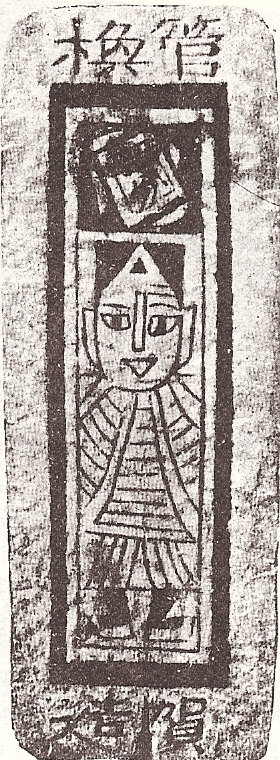
Games using playing cards probably go back to 9th century China when it was known as the ‘leaf game’. Cards were produced using woodblock printing. The first reference to the game is from 868, mentioning a princess playing with her in-laws. The first book on the topic is from a century later, called Yezi Gexi, allegedly written bij a woman. Alcohol and money seem to have been connected with card games even from these earliest sources.
From China it travelled to India and Persia, spreading into Egypt during the Mamluk empire. (The oldest fragments of cards were found in Egypt.) During the 14th century, the cards made their way to up to Europe through the Italian and Iberian peninsulas. The European version of the game seems to be derived from the Islamic world, with the roles like ‘king’ inherited from the Mamluk era. The cards we now buy in the shops, though, are mostly based on the French rendition of the game pieces when they replaced the Mamluk court cards with representations of European royalty and characters. Most cultures had their own designs, references and games, gradually morphing into the one we now know centuries later.
When the packs first appeared they were expensive, having been hand painted. At first only the rich could afford the tiny works of art. As their popularity grew the production of the cards became faster and cheaper, ensuring its spread throughout most of the known world.
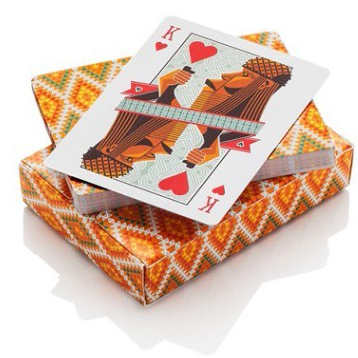
Playing cards also have a rich history in pop culture – with countless examples found in old paintings, modern movies or packs featuring today’s ‘heroes’. I love the ‘Lost Wax Playing Cards’, a set designed by artist Olutade Abidoye to tell the history of the former Benin Empire in 15th – 19th century Nigeria.
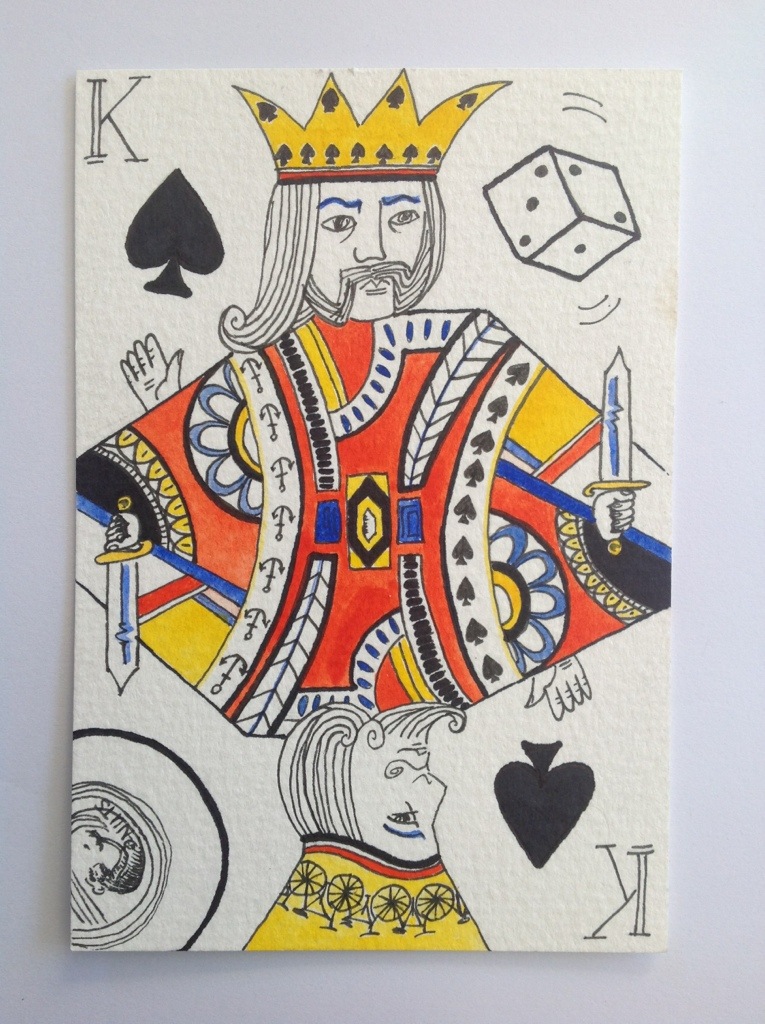
For my postcard, I settled on a representation of the 15th century Parisien king of hearts, supposedly modelled after Charlemagne, the medieval king of the Franks. He’s gotten a modern upgrade in references, mostly inside jokes between friends. Who said that 21st century Charlemagne couldn’t have bikes on his hat and a frisbee? If history tells us anything, is that cards evolve to stay relevant in new times.
 Brain & Guts