
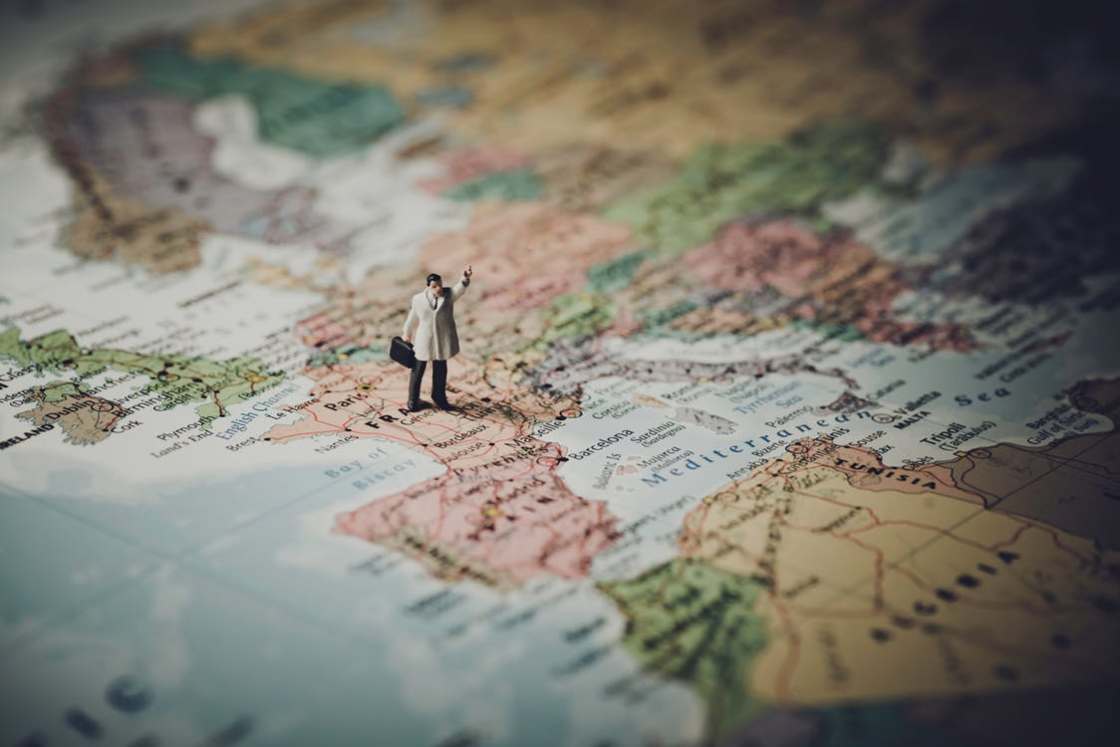
Last summer I applied for a curation course in Venice and got in! The financial implication was sadly a little too complicated, but it got my creative juices flowing. As part of the application we had to submit an idea for an exhibition – and this is mine. The project would still be one to follow up on in one form or another.

I’ve written about identity before, simply because it’s a concept which fascinates me. Having moved countries several times growing up, I was never fully part of any one culture. I got to know what it’s like to be a (privileged) outsider.
What I do know is that regardless of having lived on most continents, I definitely identify as European, specifically Dutch. Dutch is my first language, ‘Nederland’ is emblazed on my passport and it’s the place both my parents were born and grew up. Plus, I currently live here! My perspective on the European concept is therefore decidedly insular: I’m an insider. This is why I would love to uncover alternative perspectives on European-ness. How do ‘others’ – those considered outsiders – see Europe? People flood into Europe every day in search of a better life. Sometimes this is because they are forced to flee against their will, sometimes because they are looking for a specific life they think they can find here.
First, let me very briefly explain a theory which I think brilliantly illustrates how the concept of identity, of insider-outsider, works. It’s a theory taken from my anthropological education, but you’ll be able to get it if you understand how a fridge works. Yup, identity is a theoretical fridge. The anthropologist Tomas Erikson explains that, as with identity, a fridge needs to push out what it does not want in order to be able to keep what it does want. A fridge spits hot air out at the back so it can keep the cool air in. Social groups identify who they are, cool air, by clarifying that which they are not and reject that: the hot air. Knowing who you are is easiest by clarifying who you are not. Identity is, therefore, exclusive – you’re either in or you’re out. Are you hot or cool air?
Historically Europe has portrayed itself in response to ‘others’ for centuries, with different perspectives on this identity and concept coming mostly from within Europe itself. There are of course numerous national identities that exist within Europe, but they relate themselves to their overarching The European identity. It’s a subject debated within national politics, now mostly seen in relation to the European Union, and is today increasingly felt due to the blurring of nationalities. Cheap Easyjet flights allow you to be able to meet the love of your life on the other side of Europe instead of one village over. The movement of people (whether freely or against their will) has always been a part of history – think Silk Road, Vikings, the Huguenots, or the Slave Trade. Yet maybe because in these times of Brexit and Trump, the arrival of war refugees from Syria and a political swing to the right it seems that the topic of identity and distinguishing who is a part of ‘us’ has a renewed sense of urgency.
So a question starts to loom: what do those who live in Europe and are labelled as ‘outsiders’ think about the concept of Europe? Is Europe a relevant concept for them? What is it about the concept of Europe that makes them feel excluded or included?
The theories on identity by Thomas Erikson, locality by Arjen Appadurai, and art versus ethnography by Barbara Kirshenblatt-Gimblet seem relevant as a base for a theoretical framework. They each discuss the fluidity of the concept of identity.
I’d like to organise an exhibition about Europe within Europe but made up of outsider perspectives. An exhibition similar to the one once hosted at the Teyler Museum called ‘the exotic man’ – but in the reverse. What do those Moroccan, Turkish, Ghanaians or Syrians that live in my very own city of Amsterdam feel it means to be Dutch or European? Do they think they can ever become an insider?
Let’s get some answers.
 Brain & Guts