
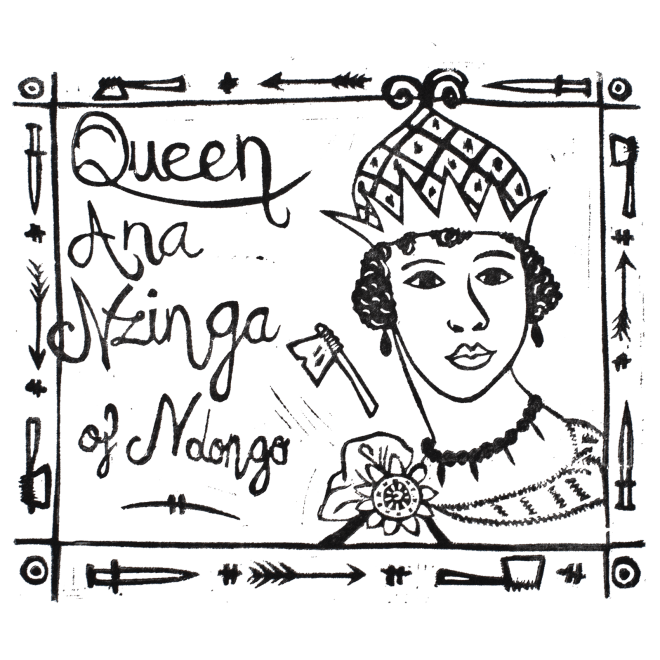
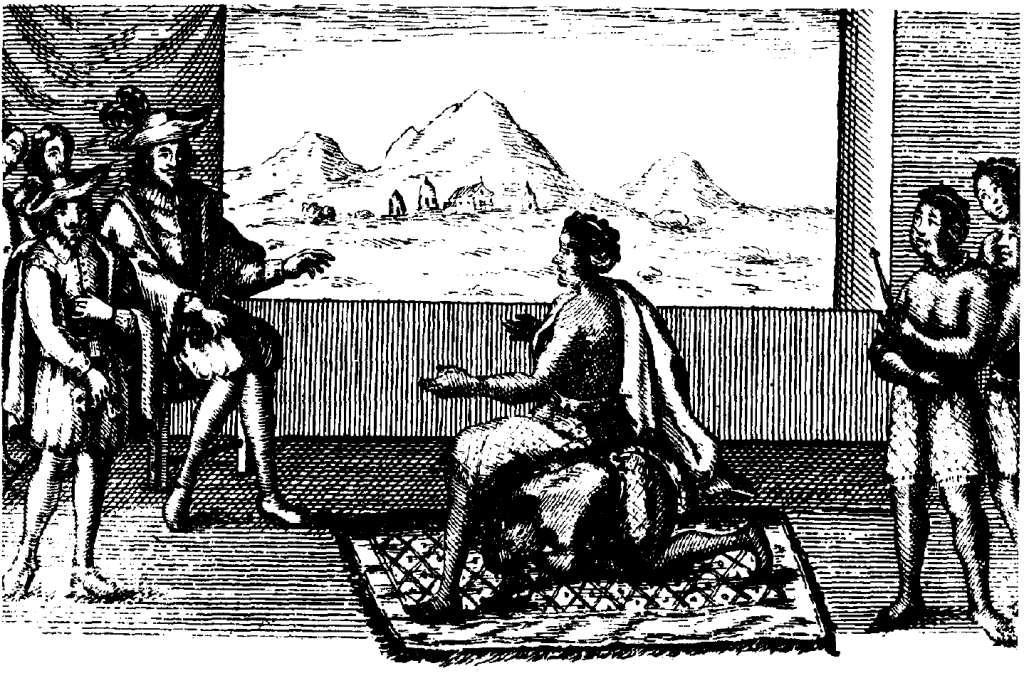
Queen Ana Nzinga (1583 – 1663) had several names, using whatever name benefited her most. She was a 17th-century ruler of the Ndongo, Matamba Kingdoms and Mbundu people in what is now Angola. Born into the ruling family of Ndongo and Matamba, Nzinga demonstrated she was a clever negotiator and apt at defusing political crises. There’s a great story of being the ambassador to the Portuguese but not getting offered a seat during negotiations. She got her servant to kneel and be her seat, so she could negotiate at an equal level.
After her brother’s death, she assumed power over their kingdoms. During her reign, she fought (battles and all) for freedom against the Portuguese, who were colonising the area at the time. She even had a brief alliance with the Dutch. She succeeded – her kingdom was not colonised during her long lifetime. Her conversion to Christianity, and taking the name Ana, was likely also a political move.
She lived until her eighties, outliving 11 Portuguese governours.
Today, she is remembered in Angola for her political and diplomatic acumen, as well as her brilliant military tactics. She also features as a character on the strategy-based video game Civilization VI.

1. Contemporary illustration of Queen Nzinga in negotiations with the Portuguese governor, dated 1657
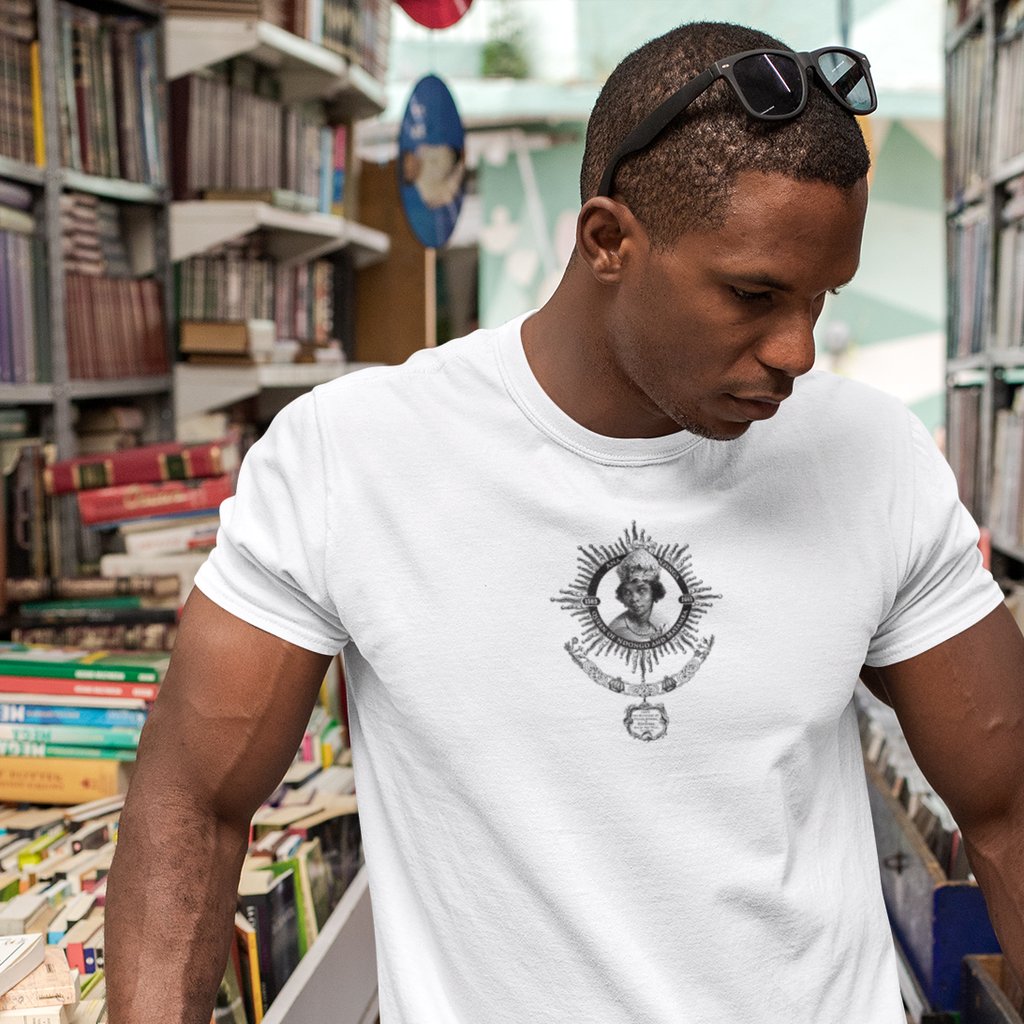
2. A t-shirt with her portraits by historywear.com
3. Statue in Luanga, modern-day Angola
ALSO LOOK UP:
Other African warrior queens include Queen Amina, Makeda or queen mum Yaa Asantewa. In India, another woman also fought against colonial forces. The queen of Jhansi, Lakshmibai, fought the British in the north of India, demanding independence. Another master negotiator was Sayyida al-Hurra, a 16th-century Moroccan pirate and queen of Tetouan who controlled a fleet in the Mediterranean and made a pretty penny negotiating with the Spanish and Portuguese about their prisoners.
Sources and other media:
- Article: Njinga Mbandi’, Pedagogical Unit, UNESCO Women in African History: https://en.unesco.org/womeninafrica/njinga-mbandi/pedagogical-unit/3
- Article: ‘Women Leaders in African History: Ana Nzinga, Queen of Ndongo’, Alexander Ives Bortolot, MET Museum, 2003: https://www.metmuseum.org/toah/hd/pwmn_2/hd_pwmn_2.htm
- Video: ‘Queen Njinga of Angola: Reflections on Gender, Leadership, and the Place of Women in Politics’, Dr. Linda Heywood, Boston University, 2017:
 Brain & Guts