
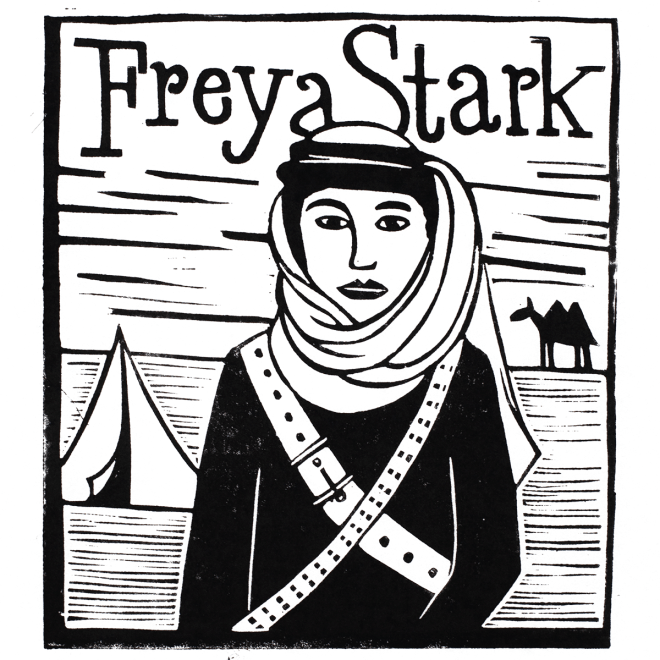
Freya Stark was a travelling writer who visited and described much of the Middle-East and beyond. Speaking many languages, she could often communicate with local women, giving her significantly different insights and perspectives from her male peers. She was often the first western female solo traveller in those parts of the world, in remote areas of Turkey, Iran or Afghanistan. Starting in cities like Bagdad, Beirut or Damascus she would set off into the desert on a camel to meet new people and explore new places. With her witty commentary, attention to detail, personal experience, practical tips, informed insights and knowledge about local culture, customs and history, she inspired generations of travellers to see and explore the world on their own.
“Surely, of all the wonders of the world, the horizon is the greatest.”
Freya Stark
Freya’s mother, an artist, painted ships on her daughter’s bed, so Freya’s childhood dreams were filled with adventure. The daughter of two travelling artists, Freya saw numerous corners of Europe and spoke several languages (with German actually being her first). Although she had a slightly troubled childhood, it did make her feel comfortable in different cultures and used to being on the move.
In 1912 she entered the University of London, but left with the outbreak of WW1 to serve as a nurse in Italy, a country which she often called home. It’s during this time, in her early thirties, that she learns to speak Arabic, right as the Ottoman empire falls apart into French and English territories and opens up for travellers. This is when she starts her first solo travels.
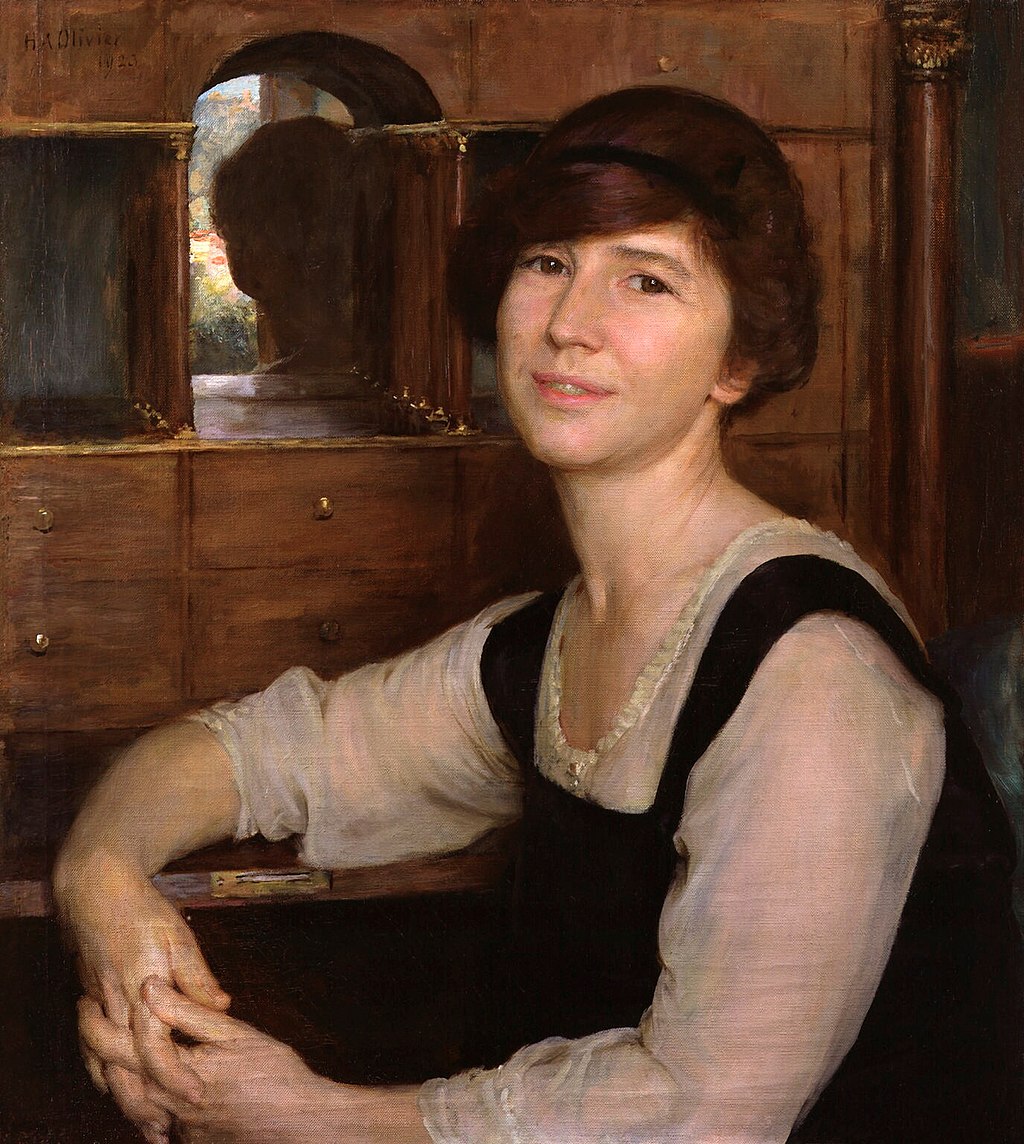
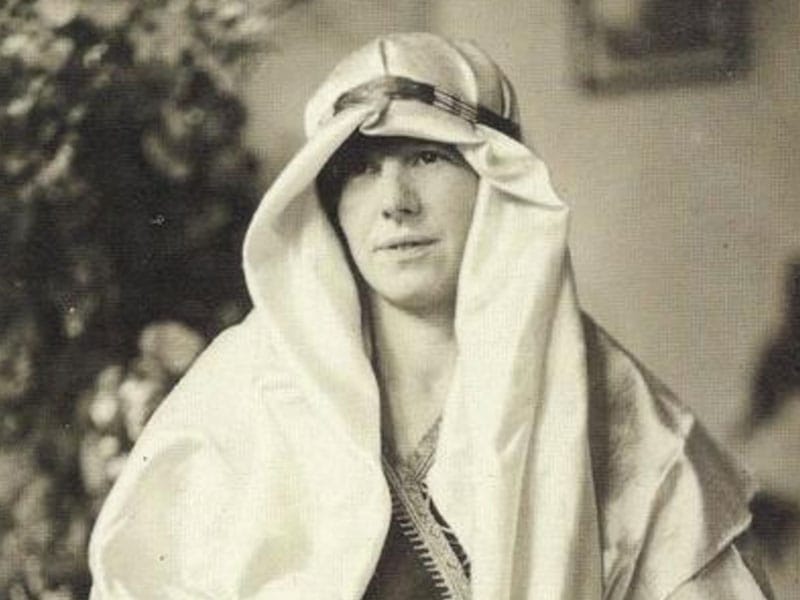
Freya planned her own trips. When she travelled from Damascus to Baghdad, joining Bedouins in the desert, she upset local colonial communities by travelling with Iraqi locals. During her later travels, through areas of modern-day Syria (the Druze area, under martial law) she was captured and it was revealed would-be assassins had been stalking her and that she could easily have been killed. For her first book, The Valleys of the Assassins (1934) (after the historical sect that gave its name to the modern word), Freya had learned Persian and was probably the first westerner to travel there. The book, which established her style and kickstarted a career of travel writing, was well received. Having taken drawing courses in London and invested in her geographical and cartographic knowledge, she was able to make her own maps and geographical surveys. Though not always completely accurate on camelback, she did map out previously unrecorded areas, like the valleys near Alamut (= ruins of a mountain fortress castle near the Alamut River in modern-day Iran), and corrected existing maps with her investigations.
“I have no reason to go, except that I have never been, and knowledge is better than ignorance. What better reason could there be for traveling?”
During World War II Freya worked for the British Ministry of Information in Aden, Baghdad, and Cairo with the colonial office. She’d become known as an expert who knew her way around the Arab world. Her role was to promote pro-British leanings, which included making radio shows in Arabic and founding the anti-Nazi Brotherhood of Freedom in Cairo. There is talk that her involvement helped keep Yemen neutral during the war by managing to get officials to show propagandist films. She did this by speaking to the wives of the officials and convincing them these were must-see films.
In fact, she was excellent at talking her way into perks and out of tricky situations. She managed to get soap and powder delivered to a barricaded British Embassy, where all remaining Brits were hiding when the Iraqis went over to the German side. When she was caught crossing a border in an area she wasn’t supposed to be in, she managed to convince the official she could not possibly be sent to an internment camp without a lady maid and, after some tea, was sent on her way without consequence. (The excuse of the lady maid is quite funny if you considered how she travelled). Of this, and the other such situations she manoeuvred herself in or out of, she said:
“The great and almost only comfort about being a woman,” Stark reflected, in a maxim that encompasses many such events in her illustrious career, “is that one can always pretend to be more stupid than one is and no one is surprised.”
Freya Stark
Throughout her life, she travelled extensively in the Middle East, Turkey, Greece, Kurdistan, Persia, Yemen, Egypt, Iraq, Iran, India, Afghanistan, Nepal, and many more. Everywhere she went she studied the land, the people, and their culture, and made maps. She had soon become a famous and widely recognized expert on these countries and gave lectures at the Royal Central Asian Society and for the BBC.
Though often struggling with her health (a weak heart and the occasional dengue fever or malaria), she was not averse to travel by mule or camel, sleep on camp beds, and travel with local guides. She knew how to sleep rough and do like the locals do. On the flip side of that, for social occasions, she was noted for her sense of style. She loved fashion. A childhood scar on the side of her head made her especially love hats. So her vanity ensured she stayed a lady, just on her own terms.
“To awaken quite alone in a strange town is one of the pleasantest sensations in the world. You are surrounded by adventure. You have no idea of what is in store for you, but you will, if you are wise and know the art of travel, let yourself go on the stream of the unknown and accept whatever comes in the spirit in which the gods may offer it.”
Freya Stark
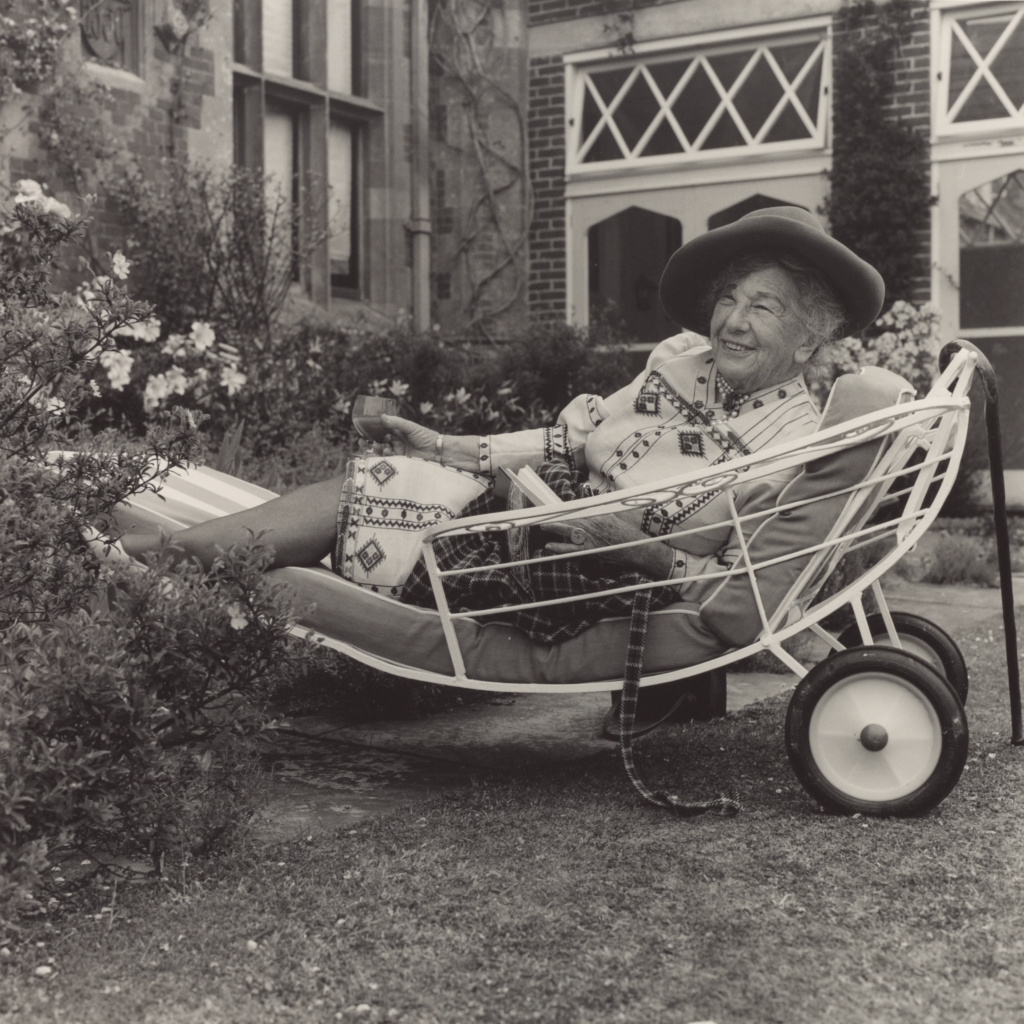
In spite of physical problems and illnesses, she never stopped travelling and learning. She learned Turkish at almost 60 and climbed the Himalayas at 86. Though she didn’t have any children of her own, she travelled with her many godchildren. In 1972 she was knighted, so by the time she died in 1997 at the grand old age of 101, she was known as ‘Dame Freya Stark’.
Freya did not make any grand flashy discoveries. Instead, she observed the nuances of the people she met, the customs she observed and the places she visited. She was good at getting people to talk and she actually listened. She said, “I like people [to be] different, and agree with the man who said that the worst of the human race is the number of duplicates.” So her view of ‘modern Arabia’, of the people that didn’t often have a voice, is her grand triumph.
Also look up:
If you liked Freya Stark’s story, make sure to also look up Gertrude Bell, Lady Mary Mortley Montegu, Isabella Bird, or Alexandrine Tinné. Or try to find the book ‘Wayward Women: A Guide to Women Travellers’ by Jane Robinson from 1996.
Sources and other media
- Article: ‘East Is West, Freya Stark’s travels in Arabia’, Claudia Roth Pierpont, The New Yorker, 2011: https://www.newyorker.com/magazine/2011/04/18/east-is-west-claudia-roth-pierpont
- Article: ‘Freya Stark’, John C. Hawley, Santa Clara Univeristy, 1998: https://scholarcommons.scu.edu/cgi/viewcontent.cgi?referer=&httpsredir=1&article=1115&context=engl
- Podcast: ‘Freya of Arabia’, Stuff Missedin History Class, 2012: https://www.iheart.com/podcast/stuff-you-missed-in-history-cl-21124503/episode/freya-of-arabia-30207962/
- Article: ‘Freya Stark, Sibylle Duda, Fembio: https://www.fembio.org/english/biography.php/woman/biography/freya-stark/
- Article: ‘The Explorer Series. Freya Stark – The Poet of Travel’, Sara Sherwood, The Heroine Collective, 2020: http://www.theheroinecollective.com/freya-stark/
- Article: ‘Freya Stark’, Facts and Details, 2018: http://factsanddetails.com/world/cat55/sub393/entry-5861.html

 Brain & Guts
One Comment
Comments are closed.