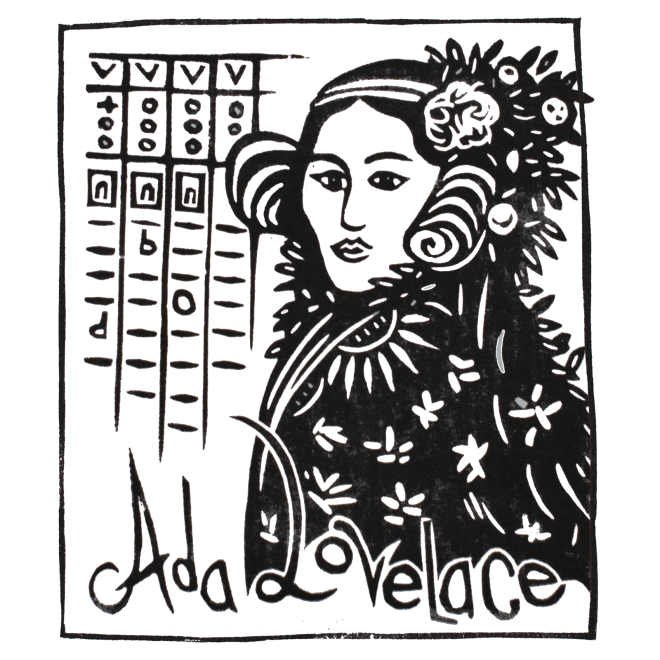
Once dubbed the “Enchantress of Numbers”, Ada Lovelace is considered by many to be the first-ever computer programmer. She recognised the potential of the computing machine built by a man called Charles Babbage when others did not. Ada was the daughter – and only legitimate child – of poet Lord Byron and Annabella Milbanke. Ada’s mother, Lady Byron, was trained in mathematics, usual for a woman at the time, and wanted her daughter to get the same training. Lord Byron nicknamed his wife was the ‘Princess of Parallelograms’, which was not meant as a compliment. Lady Byron insisted Ada get educated in maths and rigour – and definitely not in poetry – so she wouldn’t turn out like her father. One of her instructors was Mary Somerville, a Scottish astronomer and mathematician who was one of the first women to be admitted into the Royal Astronomical Society. They stayed lifelong friends.
Everything is naturally related and interconnected
Ada Lovelace, voicing the legacy of her tutor Mary Somerville
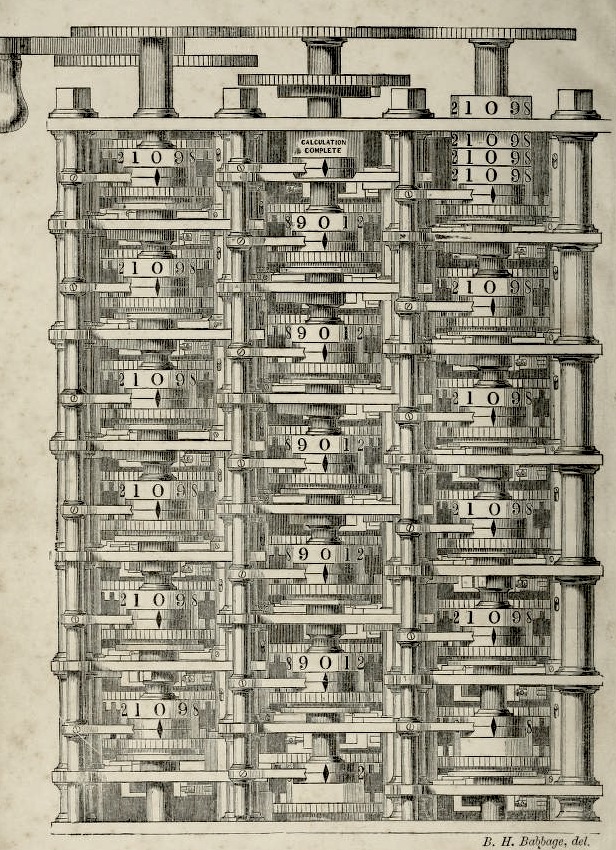
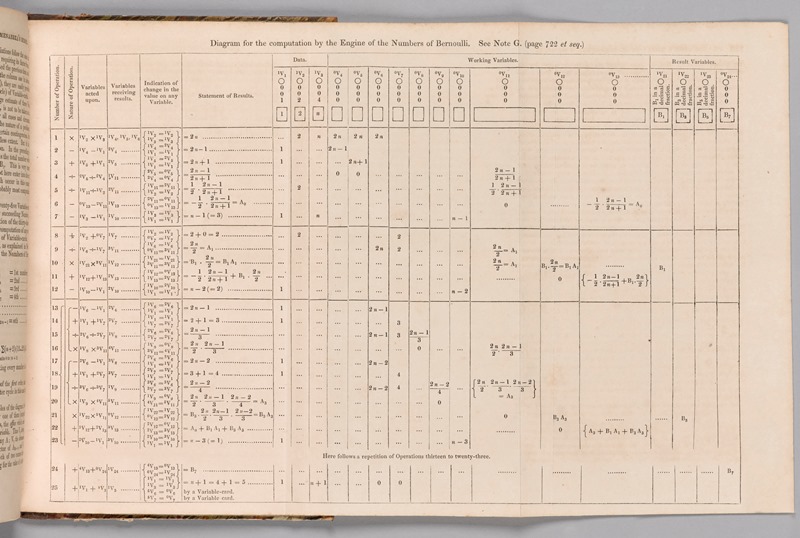
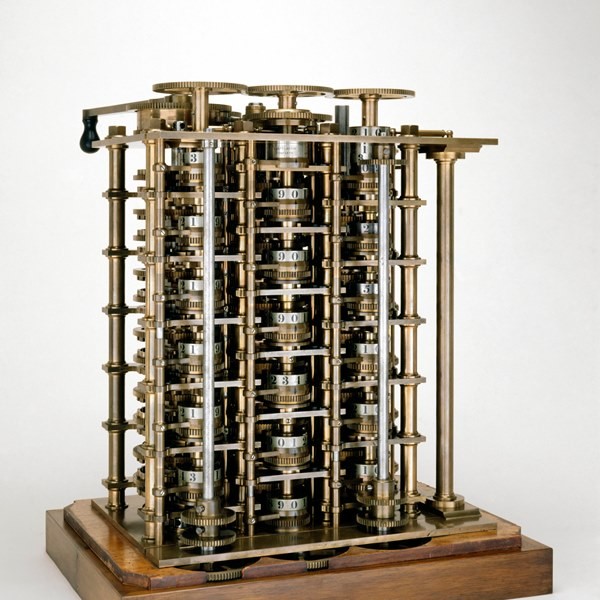
Source: Science Museum
As a teenager, Ada met the mathematician and inventor Charles Babbage at a party. Known as the father of the computer, Babbage came up with a device known as the analytical engine, designed to handle complex calculations. It was meant for sewing machines and factory mechanics. Ada was fascinated by Babbage’s ideas and inventions and they struck up a correspondence. Being skilled at languages too, Ada was asked to translate an article on Babbage’s analytical engine, which had been written in French by the Italian engineer Luigi Federico Menabrea for a Swiss journal. Not only did she translate the original French text into English, she also added her own thoughts and ideas on the machine. Her notes ended up being three times longer than the original article.
I believe myself to possess a most singular combination of qualities exactly fitted to make me preeminently a discoverer of the hidden realities of nature.”
Ada Lovelace
In her notes, Ada described how codes could be created for the device to handle letters and symbols, alongside numbers. This, she theorised, could be used to get the engine to repeat a series of instructions, a process known as looping. It’s what computer programs use today. Ada also theorised about other possible future applications. For her work, having introduced several computer concepts, Ada is often considered to be the first computer programmer. In contemporary culture, she can add being Lisa Simpson’s hero and being featured in the awesome book ‘Good Night Stories for Rebel Girls’ to her accomplishments.
Sources and other media:
- Book: ‘Good night stories for Rebel Girls’, Elena Favilli and Francesca Cavallo, 2017.
- Article: ‘Untangling the Tale of Ada Lovelace’, Stephen Wolfram, WIRED, 2015: https://www.wired.com/2015/12/untangling-the-tale-of-ada-lovelace/
- Article: ‘How Ada Lovelace, Lord Byron’s Daughter, Became the World’s First Computer Programmer’, Maria Popova, Brain Pickings, 2014: https://www.brainpickings.org/2014/12/10/ada-lovelace-walter-isaacson-innovators/
- Podcast: ‘Ada Lovelace’, In Our Time, BBC Radio 4, 2008: https://www.bbc.co.uk/programmes/b0092j0x
- Video: ‘Ada Lovelace, The Original Woman in Tech’, Zoe Philpott, TEDxBucharest, 2017:

 Brain & Guts
2 Comments
Comments are closed.